Lucknow: People have worshipped divine deities for prosperity and progeny since times immemorial. In ancient Greece, Rome, Egypt, China and India, fertility rites and ceremonies were popular and springtime was a favoured season. Such springtime festivals and rituals defined the culture of many ancient civilizations.
In India, celebration of springtime after the bitter cold winter was eagerly awaited. The changes in natural beauty of the trees and flowers as also the exuberant activity of the animals and birds were beautifully captured in poetry, music and dance. Springtime is chiefly to celebrate love in all species; even trees were said to have cravings or ‘dohada’ for such ceremonies only after which they were said to blossom. We find beautiful allusion to this springtime ritual in the Mālavikāgnimitram of Kalidasa, as part of the very plot, as it offers opportunity for the King Agnimitra to meet the heroine Malavika. Kalidasa’s Abhijnanashakuntalam also makes reference to this festival when the palace maids discuss that the celebration has been banned by King Dushyanta as he is filled with remorse at having turned away his beloved Shakuntala when he had lost his memory due to the sage’s curse.

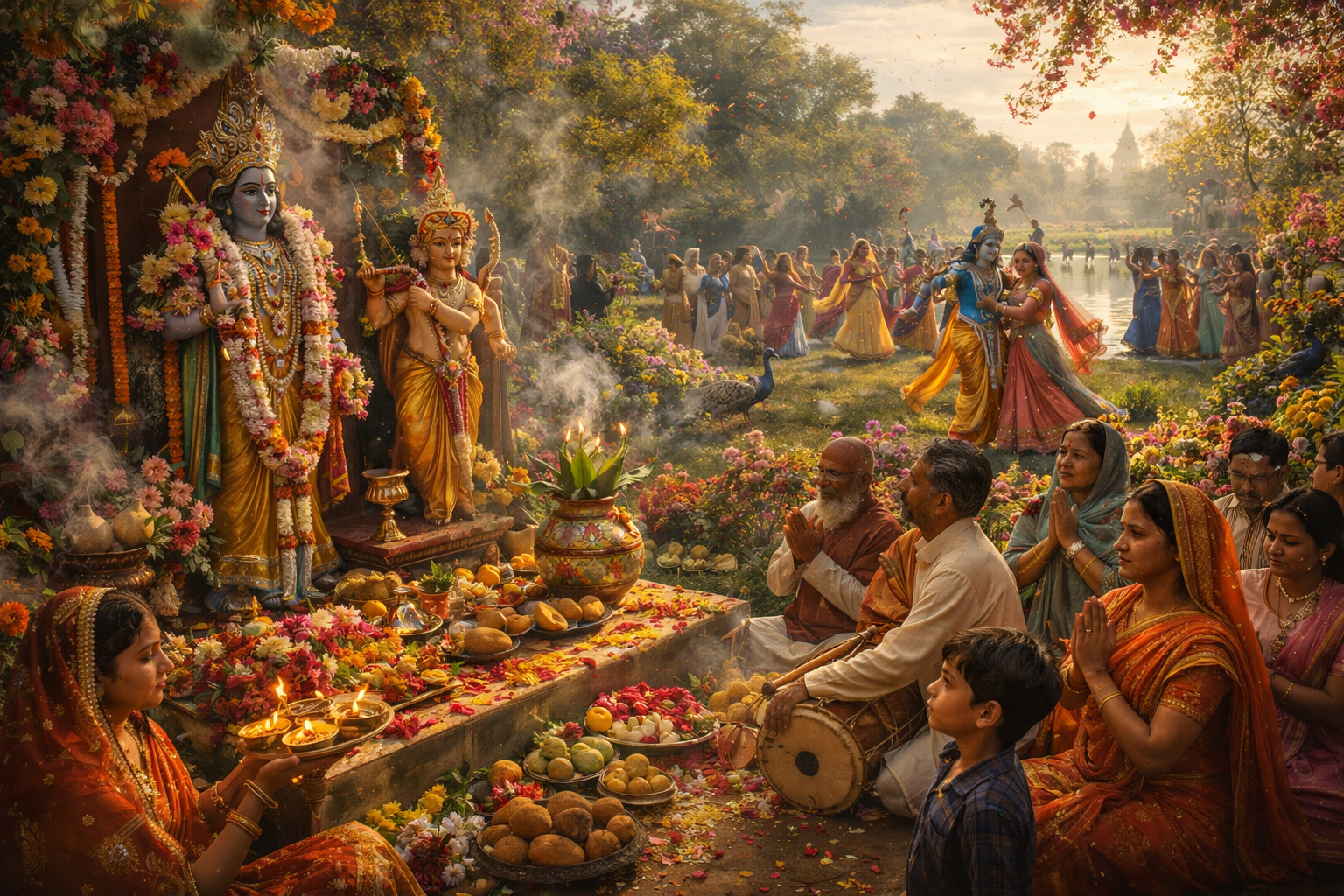
Among descriptions of many types of vratas and pūjas, the Matsya Purāņa describes the worship of Lord Vishnu as Kama Deva on the twelfth day in the bright fortnight of Caitra month in marudgaņotpattikathanemadanadvādaśīvratakathanam(Chapter 7, Matsya Purana). The householder was to arrange fruits, vegetables, flowers, coconut,guḍa (jaggery), incence and lamps on a plantain leaf as offerings to Kama Deva. The image of Lord Vishnu was decorated with pearls, gem-set jewels, garlands, silken cloths and other ornaments. A kumbha (decorated jar with water crowned with mango leaves and coconut anointed with sandal and vermilion) was to be arranged and worship offered in the evening with music, drums and singing. Thekumbha was to be then donated to a Brahmin with the fruits, flowers and cloth the next morning.
In many parts of India and Nepal, there are vestiges of the springtime worship of Kama Deva in different ways even today, without even taking Holi celebrations in North India into account. The Rāsa-līlā or circular dance of the gopīs around Krishna in spring season is described in the Bhāgavata and many other Purāņas, notably Viṣnu Purāņa and Brahma Vaivarta Purāņa. The Harivaṃśa (a supplement to the Mahabharata), is a rich source of information on music and dance and has a number of important and early references to the rāsa dance. Krishna is the supreme dancer throughout the Puranas. The Bhāgavata culture encouraged the devotees to arrange dance, drama and music festivals in honour of Krishna. In the Eleventh Skandaof the Bhāgavata, Krishna asks his devotees to sing, dance and enact his story (gāyana and abhinaya) in festive occasions to sanctify their lives; in festivals, food, song and dance should be offered to the Lord; festivals and Yatras should be organized in a regal manner with great pomp and performance of dance and music.
The Gitagovindam of Sri Jayadeva is at the acme of poetry that celebrates springtime festivals of love. In Vasanta Ritu, Madana comes fully armed with his potent arrows that are flowers to strike at the heart. The trees and creepers all burst into brilliant hues, filling the air with heady fragrance. Intoxicated with the aroma that charms even the Rishis, birds and bees, deer and peacocks are all in exuberant mood. Even the creepers cling to the lofty trees passionately, like maidens entwining their arms around the beloved!
उद्भिन्नस्तबकावतंससुभगाः प्रेङ्खन्मरुन्नर्तिताः
पुष्पोद्गीर्णपरागपांशुललसत्पत्रप्रकाण्डत्विषः।
गम्भीरक्रमपञ्चमोन्मदपिकध्वानोच्छलद्गीतयः
प्रत्युज्जीवितमन्मथोत्सव इव क्रीडन्त्यमू भूरुहः॥

This verse is from poet Bhavabhuti’s Uttararamacharitam drama, where he says that in springtime, the trees are dancing, laden with flowers of various hues, swayed by the breeze, with pollen and petals flying about, with the cuckoos calling out, inflaming the passion of love such that it appears as if they are playing the Manmathotsava – festival of Kama Deva. Thus we see the connection to the springtime festival of Madanotsava with the Holi celebrations of our times.
Team Siddhanta Knowledge Foundation